БІЛІМ
Kazakhstani scientists continue to make significant contributions to addressing pressing environmental challenges and advancing the country’s agricultural sector.
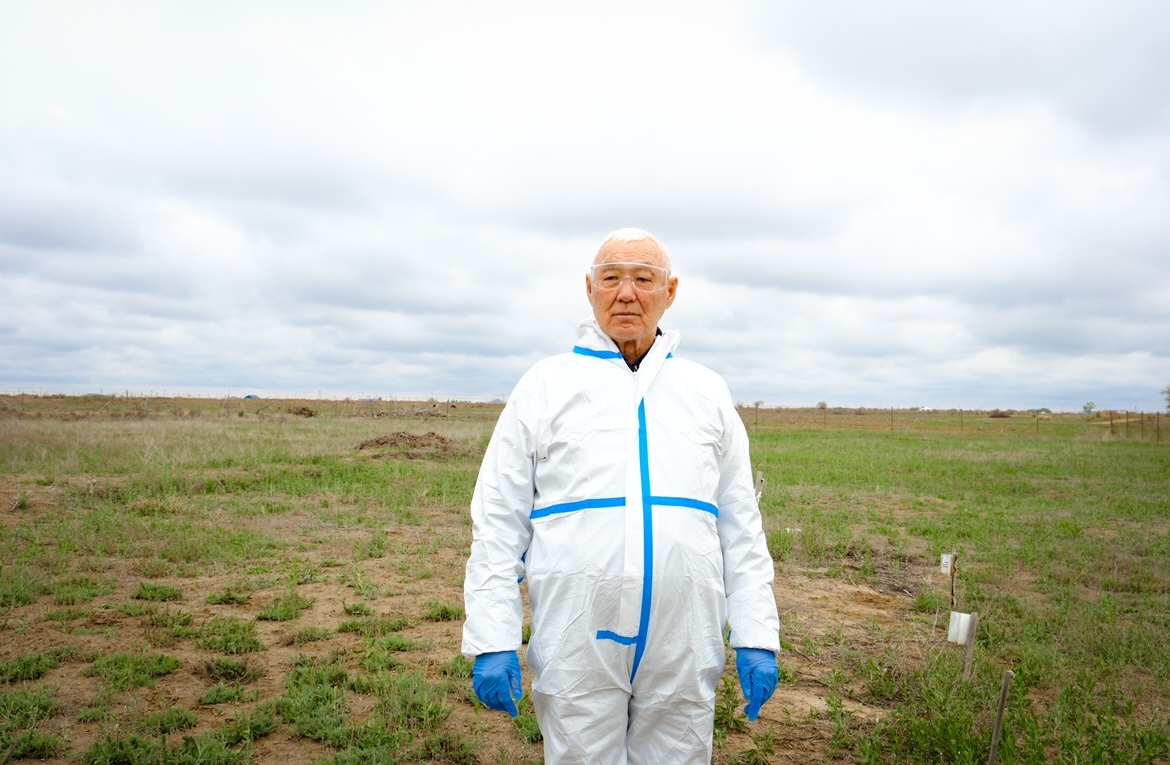
Photo: Nursaule Idayat
In our “Do You Know Kazakhstani Scientists?” series, we introduce a researcher who has developed technologies for cultivating forage crops in salinized arid regions.
Bolat Mukhambetov is a Doctor of Agricultural Sciences who has been conducting research in agriculture and forage production for more than 50 years. He serves as Head of the Scientific and Production Center for Biology, Geoecology and Arid Forage Production at Atyrau University named after Kh. Dosmukhamedov, as well as Director of the Research Institute of Ecology, Bio- and Nanotechnologies. His scientific work focuses on solving key challenges related to the sustainable development of arid forage production, pasture management, and geoecology. Between 1985 and 1990, Bolat Mukhambetov conducted the first comprehensive studies of the Caspian Sea coastline and carried out the selection of forage plants capable of growing in saline soils. He focused on plant species thriving in coastal saline soils where the concentration of toxic salt ions exceeded 0.9%. These studies later became the foundation for research aimed at restoring degraded lands and strengthening the forage base for livestock production.

The results of Bolat Mukhambetov’s research have been published in international scientific journals indexed in Scopus and Web of Science. He is also the author of several patents and breeding achievements of practical significance for the agro-industrial sector. One of the key areas of his work is the project “Development of Efficient Technologies for Cultivating Arid Plants (Semi-Desert and Desert Conditions)”, implemented during 2024–2026. The project focuses on developing modern cultivation methods for forage crops adapted to the challenging climatic and environmental conditions of western Kazakhstan.
As part of the project, seeds of the yellow sweet clover variety “Medovyy” (“Honey”) have been introduced into practical use. These seeds have been supplied to the Kyzylorda Region for the production of grass, haylage, and silage, while also being used to restore the fertility of salinized soils. The variety can yield up to 600 kilograms of honey per hectare, creating new opportunities for the development of beekeeping and rural economies. In addition, technologies for cultivating Kochia prostrata and producing livestock feed based on this plant are being introduced at farms across the arid regions of Western Kazakhstan.
Research activities continue within the framework of a grant-funded project covering an area of 40–50 hectares and have already reached the stage of industrial-scale implementation. Scientific and practical recommendations prepared in 2025 are currently being used by farmers and agricultural producers as practical guidelines.
Bolat Mukhambetov’s innovations are of considerable importance for the development of Kazakhstan’s agricultural sector. They contribute to the restoration of degraded pastures in Western Kazakhstan, the establishment of a scientific basis for creating irrigated cultivated pastures on the saline lands of the Caspian region, the strengthening of the livestock feed base, and the prevention of land degradation and erosion processes.
Alongside his research activities, Bolat Mukhambetov has made a substantial contribution to the development of higher education and the training of scientific personnel. Under his leadership, research projects integrated into the educational process are being implemented, while young researchers, master’s students, and doctoral candidates are being trained. He is also fostering a modern scientific school in the fields of geoecology and arid forage production.

Learn more about the outstanding representatives of Kazakhstan’s scientific community through the “Do You Know Kazakhstani Scientists?” project.

Bugin.kz

Қосымшаны жүктеп алыңыз


Мемлекеттік сатып алу бойынша
8 705 324 11 61